Top 5 Probiotic Blends for Gut Health and Bloating


Bloating, gas, abdominal discomfort and irregular bowel movements are common digestive complaints. While diet, stress, food intolerances and lifestyle can all contribute, growing research has also examined the relationship between the gut microbiome and digestive symptoms.
Probiotics live microorganisms that provide a health benefit when consumed in adequate amounts are therefore widely studied as one approach to supporting gastrointestinal health. However, probiotic effects can differ considerably according to the strain, dose, formulation and individual.
What Makes a Probiotic Blend Different?
A probiotic blend combines two or more probiotic microorganisms in one formulation. The goal may be to provide complementary characteristics rather than relying on a single microorganism. Common ingredients include Lactobacillus, Bifidobacterium, Bacillus and the probiotic yeast Saccharomyces boulardii.
Some formulations also contain prebiotics such as fructooligosaccharides (FOS), creating a synbiotic approach. Importantly, simply adding more strains does not automatically make a product more effective; the individual strains and their clinical evidence remain important.

1. Lactobacillus + Bifidobacterium Blend
A combination of Lactobacillus and Bifidobacterium is one of the most familiar approaches to broad-spectrum digestive probiotic formulation. Frequently used organisms include Lactobacillus acidophilus, Lactobacillus rhamnosus, Lactobacillus plantarum, Bifidobacterium longum and Bifidobacterium bifidum. These organisms have different biological characteristics and may provide complementary microbiome functions.
For people looking for general gut-health support, this type of blend can be an attractive formulation because it combines two major probiotic groups commonly studied in gastrointestinal research. Evidence for bloating specifically remains mixed, and benefits cannot be assumed for every combination.
2. Bifidobacterium-Focused Blend
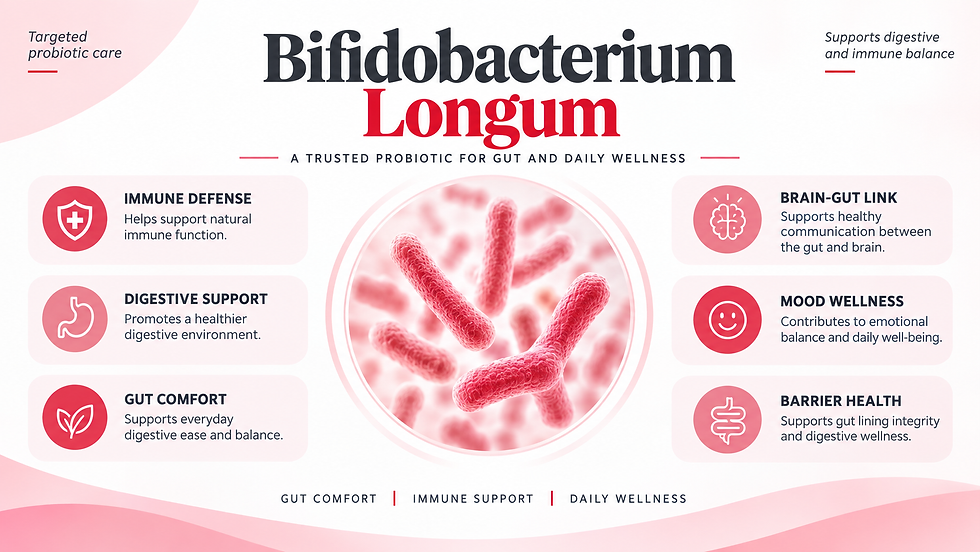
Bifidobacterium-focused formulations emphasize species such as B. longum, B. breve, B. bifidum, B. infantis and B. animalis subsp. lactis. These bacteria are naturally associated with the human intestinal microbiome and have been extensively investigated for their potential role in maintaining gut microbial balance.
Specific strains have produced interesting results in gastrointestinal research. For example, Bifidobacterium infantis has been studied in people with IBS, with research reporting improvements in symptoms including bloating and abdominal discomfort at a particular dose. This illustrates why the strain designation matters: evidence for one strain should not automatically be transferred to another.
3. Lactobacillus plantarum-Centered Blend
Lactobacillus plantarum is another interesting choice for digestive-health formulations. One extensively researched strain is L. plantarum 299v, which has been evaluated in gastrointestinal applications, including research involving abdominal bloating.
The evidence is not uniformly positive across all clinical trials, demonstrating an important principle in probiotic science: a promising strain may show different results depending on the population, study design, dose and formulation. Therefore, a L. plantarum-containing product should be evaluated based on evidence for its exact strain rather than species name alone.
4. Bacillus-Based Probiotic Blend
Bacillus probiotics, particularly spore-forming organisms such as Bacillus coagulans, are increasingly considered in digestive-health formulations. Their spore-forming nature can provide technological advantages during manufacturing and storage compared with some more sensitive probiotic bacteria.
A systematic review and meta-analysis of randomized controlled trials found that B.
coagulans supplementation improved several IBS-related outcomes, including gas, discomfort and bloating scores in the analyzed studies. Nevertheless, the authors also highlighted the need for further research, and results should be considered strain- and formulation-dependent.
5. Multi-Strain Blend with Saccharomyces boulardii
Another formulation strategy combines bacterial probiotics with Saccharomyces boulardii, a probiotic yeast. Unlike bacterial probiotics, Saccharomyces Boulardii is a yeast and has been extensively researched for gastrointestinal applications.
Research has investigated Saccharomyces Boulardii for several gastrointestinal conditions, particularly diarrhea-related applications. Its inclusion in a broader multi-strain formulation can provide a different microbial component from Lactobacillus and Bifidobacterium.
However, evidence for reducing ordinary bloating is less established than evidence for some of its other gastrointestinal applications.
SwissMedicare Probiotics connection: SwissMedicare's ready-to-fill portfolio includes multi-strain and synbiotic formulations and can incorporate selected Bifidobacterium, Lactobacillus and Saccharomyces Boulardii combinations depending on the formulation requirement. The company also offers customized ready-to-fill probiotic blends for supplement and nutraceutical manufacturers.
How Should You Choose a Probiotic for Bloating?
There is no single probiotic blend that is scientifically proven to be the best choice for everyone with bloating. A systematic review and meta-analysis evaluated 82 randomized controlled trials involving more than 10,000 people with IBS. It found that evidence varied substantially by probiotic group and outcome, with very low certainty for combination probiotics specifically for abdominal bloating or distension.
When selecting a probiotic, look beyond the total CFU number. Consider the specific strain, clinical evidence, dosage, viability through shelf life, storage conditions, manufacturing quality and formulation compatibility. A well-designed probiotic product should ideally provide transparent information that allows its ingredients and quality to be evaluated.
Conclusion
The top probiotic blends for gut health and bloating are not necessarily the products with the highest CFU count or the greatest number of microorganisms.
Lactobacillus Bifidobacterium combinations, Bifidobacterium-focused blends, Lactobacillus plantarum-centered formulations, Bacillus-based products and combinations containing Saccharomyces Boulardii each represent different approaches to probiotic formulation.
As microbiome science continues to develop, the future of probiotic products is likely to move toward increasingly strain-specific, evidence-based and purpose-designed formulations rather than one-size-fits-all probiotic blends.
Frequently Asked Questions
What is the best probiotic blend for bloating?
There is no universally proven best blend. Different strains and combinations have produced different results in clinical studies. Selection should be based on the specific strain, evidence, dose and individual needs.
Are multi-strain probiotics better than single-strain probiotics?
Not necessarily. Multi-strain products can combine complementary microorganisms, but a greater number of strains does not automatically mean greater effectiveness. The quality and clinical evidence for the individual strains and finished formulation are important.
Can probiotics reduce bloating and gas?
Some specific probiotic strains or combinations may help certain gastrointestinal symptoms, but the evidence for bloating is inconsistent. Individual responses can also vary.
Is Bifidobacterium good for digestive health?
Specific Bifidobacterium strains are widely studied for their potential role in maintaining the gut microbiome and supporting gastrointestinal function.
What should I look for in a probiotic product?
Look for clearly identified strains, appropriate CFU levels, quality testing, stability information, storage instructions and human clinical evidence where available.


Comments