Single-Strain vs Multi-Strain Probiotics for Diabetes Care
- Pixel Kumar
- 3 days ago
- 5 min read


The human gut microbiome plays a crucial role in regulating glucose metabolism, insulin sensitivity, inflammation, and energy balance. Growing evidence suggests that probiotic supplementation may improve metabolic health in people with type 2 diabetes (T2D). However, one important question remains:
Should people choose a single-strain probiotic or a multi-strain probiotic for diabetes management?
Scientific research indicates that while certain individual probiotic strains have demonstrated significant metabolic benefits, combinations of multiple probiotic strains generally provide broader and more consistent improvements in blood sugar control because they influence several biological pathways simultaneously. Recent network meta-analyses and systematic reviews increasingly support the superiority of well-designed multi-strain formulations for glycemic management.
Important: Probiotics are intended to complement—not replace—healthy eating, physical activity, and prescribed diabetes medications.
How Probiotics Influence Blood Sugar
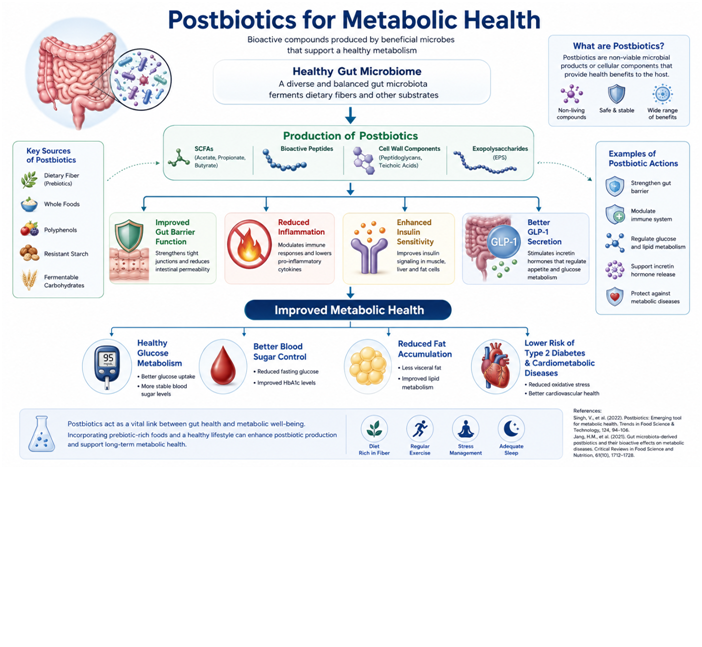
Gut microbes communicate directly with metabolic organs through the gut–brain, gut–liver, and gut–pancreas axes.
Beneficial probiotics may:
Improve intestinal barrier integrity
Reduce chronic low-grade inflammation
Produce short-chain fatty acids (SCFAs)
Improve insulin sensitivity
Reduce endotoxin leakage (LPS)
Stimulate GLP-1 secretion
Support healthier bile acid metabolism
These mechanisms collectively contribute to better glucose regulation.
What Are Single-Strain Probiotics?
Single-strain probiotics contain only one carefully selected bacterial strain.
Examples include:
Lactobacillus plantarum
Lactobacillus rhamnosus
Bifidobacterium lactis
Bifidobacterium breve
Lactobacillus casei
Each strain has unique biological properties.
For example:
Lactobacillus plantarum may improve gut barrier function.
Bifidobacterium lactis may reduce inflammation.
Lactobacillus rhamnosus may improve intestinal permeability.
Because every strain performs different functions, selecting the appropriate strain is essential.
Advantages of Single-Strain Probiotics
1. Easier to Study
Researchers can directly measure the effects of one microorganism without interference from other bacteria.
This produces clearer clinical evidence.
2. Better Quality Control
Manufacturers can more accurately guarantee:
Viability
Stability
CFU count
Shelf life
3. Predictable Biological Activity
Each strain has:
Known mechanisms
Published clinical trials
Defined dosage recommendations
Limitations of Single-Strain Products
Diabetes is a complex disease involving:
Insulin resistance
Inflammation
Gut permeability
Oxidative stress
Altered bile acid metabolism
Dysbiosis
One bacterial strain rarely addresses all these pathways simultaneously.
Therefore, clinical benefits may be modest.
What Are Multi-Strain Probiotics?
Multi-strain probiotics combine multiple beneficial bacteria.
Typical formulations include:
Lactobacillus plantarum
Lactobacillus rhamnosus
Bifidobacterium lactis
Bifidobacterium longum
Bifidobacterium bifidum
Streptococcus thermophilus
Each microorganism contributes complementary metabolic functions.
Why Multi-Strain Probiotics May Perform Better
Multiple strains provide broader physiological effects.
Different bacteria may:
Produce different SCFAs
Strengthen various regions of the gut barrier
Suppress different inflammatory pathways
Improve microbial diversity
Enhance bile acid metabolism
Increase GLP-1 signaling
This complementary activity may produce synergistic effects.
Clinical Evidence Comparing Single vs Multi-Strain Probiotics
A 2025 network meta-analysis published in Nutrition Research evaluated 30 randomized controlled trials involving 1,861 adults with type 2 diabetes.
Major findings included:
Multi-strain probiotic combinations produced greater improvements in glycemic control than single-strain probiotics.
Combinations containing Lactobacillus + Bifidobacterium + Streptococcus ranked among the most effective for improving fasting glucose, insulin resistance, and overall metabolic outcomes.
Some single strains, such as Bifidobacterium, performed particularly well for HbA1c reduction, but overall multi-strain combinations showed broader metabolic benefits.
Similarly, a 2022 meta-analysis of 33 randomized controlled trials (1,927 participants) reported that multi-strain and higher-dose probiotic formulations generally produced greater improvements in HbA1c, fasting glucose, and HOMA-IR than single-strain products.
Why Multiple Strains May Work Synergistically
Different bacterial species occupy different ecological niches in the intestine.
For example:
Function | Possible Contributing Strains |
SCFA production | Bifidobacterium spp. |
Gut barrier support | Lactobacillus plantarum |
Immune regulation | Lactobacillus rhamnosus |
Inflammation reduction | Bifidobacterium longum |
Lactate production | Streptococcus thermophilus |
Together they create a healthier microbial ecosystem than a single organism alone.
Potential Benefits of Multi-Strain Probiotics in Diabetes
Clinical studies have associated multi-strain probiotics with:
Lower fasting blood glucose
Reduced HbA1c
Improved insulin sensitivity
Lower HOMA-IR
Reduced inflammatory markers
Improved lipid profile
Better gut microbial diversity
Enhanced intestinal barrier function
However, the magnitude of benefit varies depending on the specific strains, dose, duration, and individual characteristics.
Are More Strains Always Better?
Not necessarily.
A product containing:
12 poorly selected strains
is not automatically superior to one containing:
5 clinically validated strains.
The quality of evidence matters more than the number of strains.
Key considerations include:
Clinically studied strains
Adequate CFU count
Stability until expiration
Appropriate dosage
Human clinical evidence
Manufacturing quality
Choosing the Right Probiotic
When selecting a probiotic for blood sugar support, consider products that provide:
Clinically researched strains
Human clinical trial data
At least 1–10 billion CFU per serving (or evidence-based dosing for the specific formulation)
Stability throughout shelf life
Transparent labeling
Third-party quality testing
A healthcare professional can help determine the most appropriate option, especially for people taking diabetes medications.
Future Directions
Advances in microbiome science are leading to:
Precision probiotics tailored to individual microbiomes
Personalized multi-strain formulations
Synbiotic combinations (probiotics + prebiotics)
Next-generation probiotics such as Akkermansia muciniphila
AI-guided probiotic selection
Microbiome-based precision nutrition
These approaches may further improve personalized diabetes care.
Conclusion
Both single-strain and multi-strain probiotics can support metabolic health, but current evidence suggests that well-formulated multi-strain probiotics generally provide broader improvements in glucose regulation and insulin sensitivity. Different strains contribute complementary functions—such as enhancing gut barrier integrity, reducing inflammation, producing beneficial metabolites, and supporting microbial diversity—making combination formulations particularly attractive for type 2 diabetes management.
Nevertheless, the best choice depends on the specific strains used, the quality of clinical evidence, and individual patient needs. Probiotics should be viewed as an adjunct to, not a replacement for, established diabetes treatments and lifestyle modification.
Frequently Asked Questions
1. What is the difference between single-strain and multi-strain probiotics?
A single-strain probiotic contains one specific beneficial bacterial strain, while a multi-strain probiotic contains two or more probiotic strains. Multi-strain formulations are designed to provide complementary benefits by targeting multiple aspects of gut and metabolic health
2. Are multi-strain probiotics better for diabetes?
Current research suggests that well-formulated multi-strain probiotics may provide broader support for blood sugar management than single-strain probiotics. Different strains can work together to improve gut barrier function, reduce inflammation, enhance insulin sensitivity, and support a healthier gut microbiome.
3. Can a single-strain probiotic improve blood sugar control?
Yes. Certain single strains have shown promising effects on glucose metabolism and gut health. However, because diabetes involves multiple metabolic pathways, a single strain may not provide the same breadth of benefits as a carefully selected multi-strain formulation.
4. Are more probiotic strains always better?
No. The quality of the strains and the clinical evidence supporting them are more important than the number of strains.
A product with a few clinically researched strains may be more effective than one containing many strains with limited scientific support.
ScienceDirect References
1. Ma D, et al. Probiotic supplementation contributes to glycemic control in adults with type 2 diabetes: A systematic review and network meta-analysis. Nutrition Research. 2025;136:133–152.
2. Kocsis T, et al. Meta-analysis of randomized controlled trials of the effects of probiotics on type 2 diabetes in adults. Clinical Nutrition. 2022;41(2):365–373.
3. Hasanvand A, et al. Probiotics and synbiotics for glycemic control in diabetes: A systematic review and meta-analysis of randomized controlled trials. Clinical Nutrition. 2024;43(4):1041–1061.
4. Asbaghi O, et al. Effects of probiotics supplementation on glycemic profile in adults with type 2 diabetes mellitus: A grade-assessed systematic review and dose–response meta-analysis of randomized controlled trials. Clinical Nutrition ESPEN. 2024;64:133–143.
5. Ghobadi M, et al. The effect of microbiome-modulating probiotics, prebiotics and synbiotics on glucose homeostasis in type 2 diabetes: A systematic review, meta-analysis, and meta-regression of clinical trials. Pharmacological Research. 2022;185:106520.


Comments