Role of Probiotics for Healthy HbA1c Levels
- Pixel Kumar
- 3 days ago
- 5 min read


Maintaining healthy HbA1c (glycated hemoglobin) levels is one of the most important goals for individuals with prediabetes and type 2 diabetes. HbA1c reflects the average blood glucose concentration over the previous 2–3 months and is widely used by healthcare professionals to assess long-term glycemic control.
In recent years, researchers have discovered that the gut microbiome plays an important role in glucose metabolism, insulin sensitivity, and chronic inflammation. This has led to growing interest in probiotics—beneficial live microorganisms that may help improve metabolic health.
While probiotics are not a replacement for diabetes medications or lifestyle modifications, growing scientific evidence suggests they may support healthy HbA1c levels as part of a comprehensive diabetes management strategy.
What is HbA1c?
HbA1c (Hemoglobin A1c) is formed when glucose attaches to hemoglobin in red blood cells.
Because red blood cells survive for approximately 120 days, HbA1c provides an estimate of average blood sugar over the previous three months.
General HbA1c Categories
HbA1c (%) | Interpretation |
Below 5.7% | Normal |
5.7–6.4% | Prediabetes |
6.5% or above | Diabetes |
Lowering HbA1c reduces the risk of complications affecting the heart, kidneys, nerves, and eyes.
How the Gut Microbiome Influences HbA1c
A healthy gut microbiome helps regulate:
Glucose metabolism
Insulin sensitivity
Intestinal barrier integrity
Immune function
Chronic inflammation
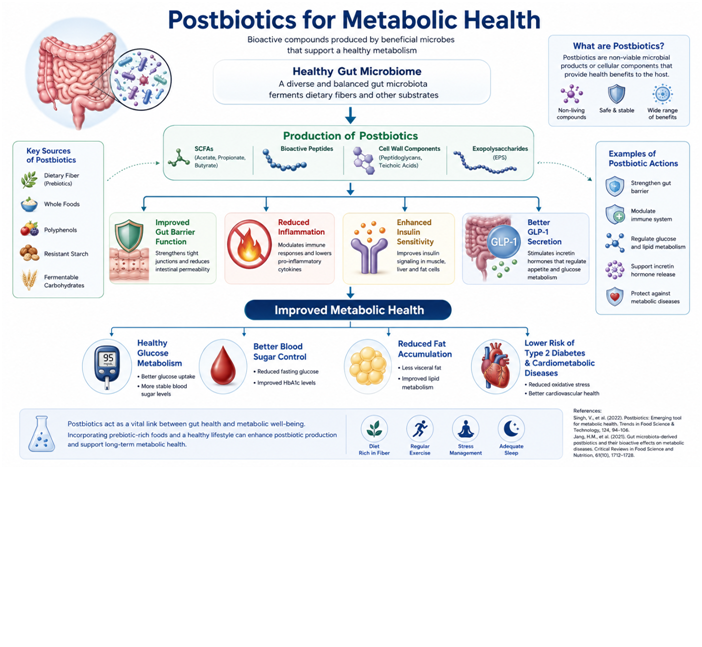
When gut bacteria become imbalanced (gut dysbiosis), harmful bacterial products can enter the bloodstream, triggering chronic inflammation and insulin resistance, which may contribute to elevated HbA1c levels.
How Probiotics May Support Healthy HbA1c Levels
1. Improve Gut Barrier Integrity
Beneficial bacteria strengthen the intestinal lining by:
Maintaining tight junction proteins
Supporting mucus production
Reducing intestinal permeability ("leaky gut")
A healthier gut barrier helps reduce the movement of inflammatory bacterial toxins into circulation.
2. Reduce Chronic Inflammation
Persistent low-grade inflammation contributes significantly to insulin resistance.
Probiotics may lower inflammatory biomarkers including:
C-reactive protein (CRP)
TNF-α
IL-6
Reduced inflammation improves the body's response to insulin, helping maintain healthier blood glucose over time.
3. Increase Short-Chain Fatty Acid (SCFA) Production
Certain probiotic species encourage the production of:
Butyrate
Propionate
Acetate
These beneficial compounds:
Improve insulin sensitivity
Reduce inflammation
Support gut barrier health
Enhance glucose metabolism
Improve energy utilization
3. Improve Insulin Sensitivity
Probiotics may support:
Better insulin signalling
Reduced oxidative stress
Improved glucose uptake by muscles
Lower insulin resistance
Improved insulin sensitivity can contribute to healthier HbA1c values over time.
4. Improve Overall Gut Microbiota Balance
Probiotic supplementation may:
Increase beneficial bacteria
Reduce harmful microorganisms
Improve microbial diversity
Restore metabolic balance
A balanced gut microbiome supports healthier glucose regulation.
Scientific Evidence: What Do Clinical Studies Show?
Several systematic reviews and meta-analyses have evaluated probiotic supplementation in individuals with prediabetes and type 2 diabetes.
A 2022 GRADE-assessed systematic review and meta-analysis of 46 randomized controlled trials involving 3,067 participants reported that probiotics and symbiotic significantly improved:
HbA1c
Fasting blood glucose
Fasting insulin
Insulin resistance (HOMA-IR)
The authors concluded that probiotics may provide favourable effects on glycemic control when used alongside standard care.
An umbrella meta-analysis published in Pharmacological Research evaluated 48 previous meta-analyses and found consistent improvements in:
HbA1c
Fasting plasma glucose
Insulin levels
HOMA-IR
The review suggested probiotics may serve as a useful adjunctive therapy for improving glycemic status, while emphasizing that study quality and strain differences should be considered.
A systematic review in Advances in Nutrition also found that probiotics may improve fasting glucose and may modestly reduce HbA1c, although the magnitude of HbA1c reduction varied among trials due to differences in strains, dosage, and treatment duration.
Probiotic Strains Commonly Studied
Research has most frequently investigated:
Probiotic Strain | Potential Benefits |
Lactobacillus plantarum | Improves gut barrier and insulin sensitivity |
Lactobacillus acidophilus | Supports glucose metabolism |
Lactobacillus rhamnosus | Promotes intestinal health |
Bifidobacterium lactis | Improves insulin sensitivity |
Bifidobacterium breve | Supports immune regulation |
Bifidobacterium longum | Reduces inflammatory responses |
Many clinical trials report greater benefits with multi-strain probiotic formulations than with single strains. Among the most extensively researched options are Lactobacillus probiotics, which have shown promising potential for supporting gut health and healthy HbA1c levels.
Foods That Naturally Support Healthy Gut Bacteria
Combining probiotics with a fibre-rich diet enhances their effectiveness.
Probiotic Foods
Yogurt with live cultures
Kefir
Kimchi
Sauerkraut
Miso
Prebiotic Foods
Garlic
Onion
Asparagus
Bananas
Oats
Apples
Legumes
Whole grains
Lifestyle Factors That Complement Probiotics
Healthy HbA1c management requires multiple lifestyle strategies
Eat a high-fibre, minimally processed diet.
Exercise regularly.
Maintain a healthy body weight.
Sleep 7–9 hours nightly.
Manage stress.
Limit sugary drinks and ultra-processed foods.
Follow prescribed diabetes medications when applicable.
Limitations of Current Research
Although findings are encouraging, several limitations remain:
Different probiotic strains produce different effects.
Optimal dosage has not been established.
Intervention durations vary across studies.
Long-term data are limited.
Individual gut microbiomes respond differently.
For these reasons, probiotics should be considered a supportive therapy rather than a standalone treatment for improving HbA1c.
Conclusion
Research over the past decade has strengthened the connection between gut health and long-term blood sugar control. Probiotics may help maintain healthier HbA1c levels by improving gut barrier function, reducing inflammation, enhancing short-chain fatty acid production, and increasing insulin sensitivity.
Current evidence from randomized trials and large meta-analyses indicates that probiotics can modestly improve HbA1c and other markers of glycemic control, particularly when combined with a healthy diet, regular physical activity, and standard medical care. However, more long-term, strain-specific clinical studies are needed before probiotics can be recommended as a primary strategy for HbA1c management.
Frequently Asked Questions
How quickly can HbA1c decrease?
Most people observe measurable reductions within 2–3 months after implementing lifestyle changes.
Can walking lower HbA1c?
Yes. Regular walking improves insulin sensitivity and can contribute significantly to lowering HbA1c.
What is the best diet for lowering HbA1c?
A diet rich in vegetables, fiber, lean proteins, healthy fats, and minimally processed foods is generally most effective.
Can probiotics lower HbA1c?
Some randomized clinical trials and meta-analyses suggest probiotics can produce modest reductions in HbA1c, particularly in people with prediabetes or type 2 diabetes when combined with standard treatment.
How long does it take probiotics to affect HbA1c?
Most clinical studies evaluated supplementation for 8–12 weeks, which aligns with the period reflected by HbA1c measurements.
Are probiotics a replacement for diabetes medication?
No. Probiotics should complement—not replace—medical treatment, healthy eating, and physical activity.
Which probiotic strains are most studied for blood sugar?
Species from the Lactobacillus and Bifidobacterium genera are the most extensively researched in relation to glycemic control.
ScienceDirect References
1. Probiotics and Synbiotics Supplementation Improve Glycemic Control Parameters in Subjects with Prediabetes and Type 2 Diabetes Mellitus: A GRADE-Assessed Systematic Review, Meta-analysis, and Meta-regression of Randomized Clinical Trials. Pharmacological Research, 2022.
2. Probiotic Therapy, a Novel and Efficient Adjuvant Approach to Improve Glycemic Status: An Umbrella Meta-analysis. Pharmacological Research, 2022.
3. Probiotics Contribute to Glycemic Control in Patients with Type 2 Diabetes Mellitus: A Systematic Review and Meta-analysis. Advances in Nutrition, 2021.
4. Probiotics, Prebiotics, and Synbiotics Added to Dairy Products: Uses and Applications to Manage Type 2 Diabetes. Food Research International, 2021.
5. Impact of Probiotics in Alleviating Type 2 Diabetes Risk in Clinical Trials: A Meta-analysis Study. Human Gene, 2023.


Comments