Probiotic Blends: The Future of Gut Health Supplements

Updated: Aug 11

A Complete Guide to Multi-Strain Probiotics for Gut Health and Nutraceutical Innovation
The global probiotics industry has experienced remarkable growth over the past decade as scientific research continues to reveal the critical role of the human microbiome in health and disease. From digestive wellness and immunity to metabolic health and women’s health, probiotics are now widely recognized as powerful tools for maintaining microbial balance in the body.
Traditionally, many probiotic supplements were formulated using a single microbial strain. While these products can provide specific benefits, modern microbiome research increasingly shows that probiotic blends—formulations containing multiple probiotic strains—offer broader, more comprehensive health benefits.
For nutraceutical brands, functional food manufacturers, healthcare companies, and ingredient suppliers, probiotic blends represent the next generation of microbiome-based health solutions.
This article explores why probiotic blends are often superior to single-strain probiotics, how they work in the gut, and why they are becoming the preferred choice in the global probiotics market.
Understanding the Human Gut Microbiome
The human digestive system is home to trillions of microorganisms collectively known as the gut microbiome. These microbes include bacteria, yeasts, and other microorganisms that play vital roles in human health.
The gut microbiome helps with:
digestion of complex carbohydrates
synthesis of vitamins
immune system regulation
protection against harmful pathogens
production of beneficial metabolites
The majority of beneficial bacteria in the gut belong to groups such as:
When the balance of these microbes is disturbed—a condition called dysbiosis various health problems can arise, including digestive disorders, inflammation, metabolic diseases, and weakened immunity.
Probiotics are beneficial microorganisms that help restore this microbial balance.
What Is a Probiotic Blend?
A probiotic blend is a formulation that contains multiple probiotic strains working together to support various biological functions in the gut.
These blends typically combine strains from different microbial groups such as:
Lactobacillus
Bifidobacterium
Bacillus
Each strain contributes unique properties to the blend, creating a synergistic microbiome-support system.
For example:
some strains support digestion
others enhance immune response
some produce beneficial metabolites like short-chain fatty acids
When combined, these strains create a multi-functional probiotic system.
Limitations of Single-Strain Probiotics
Single-strain probiotics were widely used in early probiotic research and still serve important purposes in certain clinical applications.
However, relying on only one strain can limit the range of health benefits.
Some limitations include:
Limited Functional Activity
Each microbial strain performs only a specific biological function. A single strain cannot support all microbiome pathways.
Reduced Microbial Diversity
The human gut contains hundreds of microbial species, making it difficult for a single strain to replicate natural microbiome diversity.
Lower Adaptability
Different strains thrive in different areas of the digestive tract. A single strain may not function effectively across the entire gastrointestinal system.
Probiotic Blends Mimic Natural Microbiome Diversity
Because of these limitations, scientists and nutraceutical companies increasingly prefer multi-strain probiotic blends.
Key Reasons Probiotic Blends Are Better Than Single-Strain Probiotics
The human gut microbiome is one of the most complex microbial ecosystems in the body. A healthy gut contains hundreds of bacterial species interacting in a balanced network.
Probiotic blends replicate this diversity more effectively than single-strain supplements.
By combining multiple strains, probiotic blends can:
restore microbial diversity
support multiple metabolic pathways
improve microbial ecosystem stability
This diversity helps create a more resilient gut microbiome.
Multi-Mechanism Health Support
Each probiotic strain has unique biological properties.
For example:
Some strains help break down carbohydrates and fibers. Others produce antimicrobial compounds that suppress harmful bacteria. Certain strains stimulate immune cells in the intestinal lining.
A probiotic blend allows multiple strains to work together, delivering multi-mechanism health support.
This is especially beneficial for complex health conditions such as:
digestive disorders
inflammatory conditions
metabolic imbalance
immune dysfunction
Synergistic Interactions Between Strains
One of the biggest advantages of probiotic blends is microbial synergy.
Synergy occurs when different strains enhance each other’s activity.
Examples include:
one strain producing metabolites that feed another strain
one strain strengthening the intestinal barrier while another reduces inflammation
certain strains producing short-chain fatty acids that nourish gut cells
These cooperative interactions create a stronger overall therapeutic effect.
Better Survival Through the Digestive System
The digestive tract presents several challenges for probiotic bacteria, including:
stomach acid
digestive enzymes
bile salts
Not all strains survive these conditions.
In a probiotic blend, different strains have different survival characteristics. This increases the likelihood that some strains will reach the intestines alive and active.
This improved survival leads to better colonization and greater probiotic effectiveness.
Targeted Health Applications
Modern probiotic blends can be designed for specific health goals.
Digestive Health
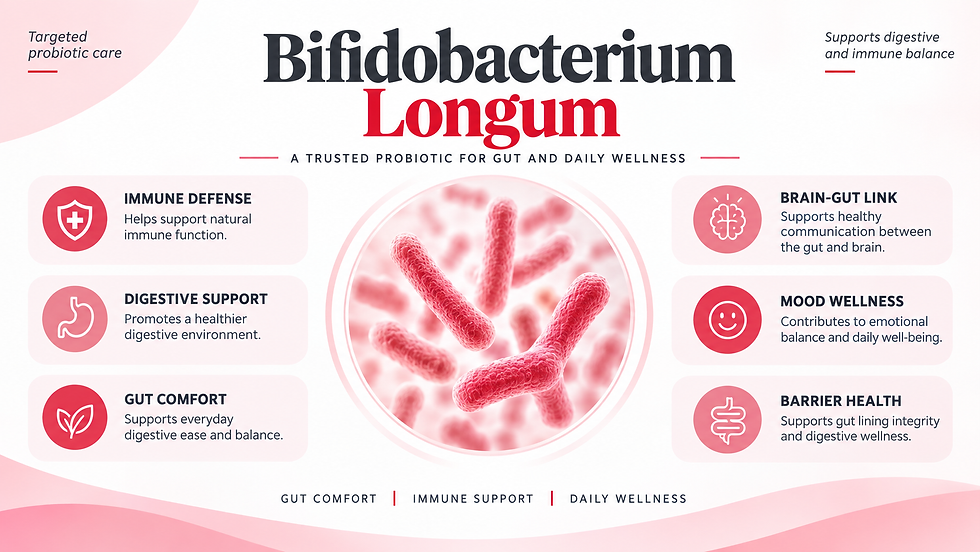
Certain strains from Bifidobacterium help improve intestinal function and support colon health.
Women’s Health
Strains from Lactobacillus are known to support vaginal microbiome balance and urinary tract health.
Immune Support
Several probiotic strains stimulate immune signalling pathways that help defend against pathogens.
Metabolic Health
Some probiotics influence metabolism, energy balance, and glucose regulation.
By combining specific strains, manufacturers can develop targeted probiotic solutions.
Stronger Anti-Inflammatory Effects
Chronic inflammation is linked to many health conditions, including metabolic disease, digestive disorders, and immune dysfunction.
Probiotic blends can help regulate inflammatory pathways by:
supporting gut barrier integrity
reducing harmful bacteria
producing anti-inflammatory metabolites
Multiple strains working together create a more balanced immune response.
Improved Gut Barrier Protection
The intestinal barrier protects the body from harmful pathogens and toxins.
Certain probiotic strains strengthen the gut barrier by:
promoting mucus production
supporting tight junction proteins
inhibiting pathogen adhesion
When multiple strains perform these roles simultaneously, probiotic blends help maintain a strong and healthy intestinal barrier.
Probiotic Blends in Modern Nutraceutical Products
Today, probiotic blends are widely used in many health products.
Dietary Supplements
Capsules, tablets, sachets, and powders containing multi-strain probiotics are among the most common probiotic products.
Functional Foods
Probiotics are increasingly incorporated into foods such as:
yogurt
fermented beverages
protein nutrition products
Medical Nutrition
Healthcare professionals may recommend probiotic blends to support digestive disorders and immune health.
Scientific Trends Supporting Multi-Strain Probiotics
Recent microbiome research highlights the importance of microbial ecosystems rather than individual bacteria.
Scientists now understand that:
microbial communities work as networks
bacteria interact metabolically
diversity supports microbiome stability
As a result, probiotic blends are considered more aligned with natural microbiome biology.
Designing an Effective Probiotic Blend
Creating an effective probiotic blend requires scientific expertise.
Important considerations include:
Strain Selection
Each strain must have proven health benefits and compatibility with other strains.
CFU Count
The number of live microorganisms must be optimized to ensure efficacy.
Stability
Probiotics must remain stable during manufacturing, storage, and transport.
Genomic Verification
Advanced technologies such as genome sequencing help confirm strain identity and safety.
Future of Probiotic Blends
The future of probiotics will likely involve precision microbiome nutrition.
Emerging trends include:
microbiome-guided probiotic formulations
personalized nutrition
genomics-verified strains
disease-specific microbial solutions
Companies investing in advanced probiotic blends are likely to play a major role in the next wave of microbiome innovation.
While single-strain probiotics still have specific clinical uses, probiotic blends offer a broader and more powerful approach to microbiome health.
By combining multiple beneficial strains, probiotic blends provide:
greater microbial diversity
synergistic biological activity
improved gut colonization
targeted health benefits
These advantages explain why multi-strain probiotics are becoming the preferred formulation strategy in the global nutraceutical industry.
As scientific understanding of the microbiome continues to grow, probiotic blends will remain at the forefront of innovation in gut health, immune support, and metabolic wellness.


Comments